Overview
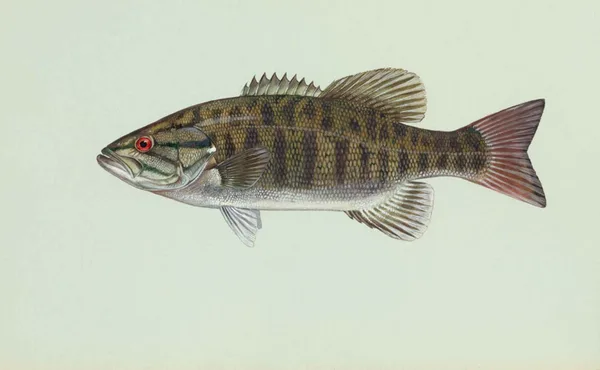
Smallmouth bass are pound-for-pound the hardest fighting freshwater fish in Michigan. They are leaner, faster, and more acrobatic than their largemouth cousins, and they thrive in the clear, rocky rivers and deep glacial lakes that define Michigan’s landscape. Michigan’s smallmouth fishery is nationally — even internationally — respected. Lake St. Clair is widely regarded as one of the best smallmouth bass fisheries on the planet, and anglers travel from across the country to wade-fish rivers like the Au Sable and the Muskegon for bronze-backed bass in the 2 to 5 pound class.
The state record stands at 9 pounds 15 ounces (9.98 lbs), caught from the Indian River in Cheboygan County in 2016 — a testament to the trophy potential of Michigan’s northern waters. While largemouth dominate weedy reservoirs and farm ponds, smallmouth own the clean gravel runs, boulder gardens, and bedrock ledges of Michigan’s best flowing water, along with the rocky shoals and drop-offs of the Great Lakes and inland lakes.
Where to Find Them in Michigan
Rivers and Streams: This is where Michigan’s smallmouth reputation was built. The Au Sable River, particularly the famous Holy Water stretch between Burton’s Landing and Wakeley Bridge, offers miles of wadeable water with gravel bars, log structure, and deep pools that hold excellent numbers of 12 to 18 inch fish. The Muskegon River is a world-class summer smallmouth destination — fish in the 4 to 5 pound class are superbly conditioned by the river’s strong current, and July through August is prime time.
The Grand River, Huron River, Manistee River, Sturgeon River, and Thunder Bay River all support strong smallmouth populations. The Thunder Bay River near Alpena is an underrated fishery that receives far less pressure than it deserves. The upper sections of many northern Michigan rivers hold smallmouth in their warmer, slower stretches downstream of trout water.
Lakes and Great Lakes Nearshore: Lake St. Clair is the undisputed king of Michigan smallmouth lakes. Its shallow, clear water, abundant goby forage, and vast rocky flats produce staggering numbers of bass — catching 40 to 60 fish in a four-hour outing is not unusual during summer, and 5- to 6-pound fish show up regularly in spring. Kevin VanDam has called Lake Charlevoix one of the finest smallmouth fisheries in the world, and it regularly produces bass over 4 pounds on rocky points and steep breaks. Burt Lake and Mullett Lake in the Inland Waterway grow huge smallmouth fueled by goby populations. Grand Traverse Bay offers clear, pristine water with plentiful smallmouth on rocky structure. Torch Lake, Higgins Lake, and Hubbard Lake round out northern Michigan’s top inland smallmouth destinations.
Lake Michigan’s nearshore waters, Lake Huron (especially around Thunder Bay and Saginaw Bay), and Lake Erie all hold excellent smallmouth populations on rocky reefs, shoals, and current-swept points.
Seasonal Patterns
Spring (April - May): Smallmouth begin staging in pre-spawn areas when water temperatures reach the low 50s, typically mid-April on rivers and early May on the Great Lakes. They move from deeper winter holes toward gravel flats and the tailouts of pools. The period between 55 and 65 degrees is prime — fish are feeding heavily on crawfish and are aggressive toward jigs and crankbaits. Spawning occurs on gravel in 2 to 4 feet of water once temps hit 62 to 68 degrees. Note that bass possession season does not open until the third Saturday in May for most waters, and the third Saturday in June on the Lake St. Clair system — catch-and-release only before those dates.
Summer (June - August): Post-spawn smallmouth settle into predictable patterns. On rivers like the Muskegon and Au Sable, they hold in current — behind boulders, along seams where fast water meets slow, at the heads of pools, and near bridge pilings. Early and late in the day they feed in riffles and runs. During midday heat they drop into deeper pools. On Lake St. Clair, they spread across rocky flats in 8 to 15 feet and feed aggressively on gobies. On inland lakes like Charlevoix and Burt, they move to main-lake points, rock piles, and humps in 10 to 25 feet of water.
Fall (September - October): The fall feed-up is one of the best windows for trophy smallmouth. Cooling water triggers aggressive feeding as fish bulk up before winter. On rivers, they begin congregating in deeper pools. On Lake St. Clair and the inland lakes, they chase baitfish along steep breaks and rocky shorelines. Jerkbaits and crankbaits in natural shad and minnow colors are deadly. Pressure drops significantly in fall as hunting season draws anglers away from the water.
Winter (November - March): River smallmouth stack up in the deepest, slowest pools. They still eat, but presentations must be slow — hair jigs, small blade baits, and drop shots crawled along the bottom. On lakes, they hold tight to rock structure in 20 to 40 feet. The catch-and-immediate-release season remains open through winter on most waters.
Techniques and Tackle
River smallmouth fishing in Michigan is predominantly a light-tackle affair. A 6’6” to 7’ medium-light spinning rod with 6 to 8 pound fluorocarbon or braided line (with a fluoro leader) is the standard setup. The tube jig is king — a 3-inch tube in green pumpkin, brown, or smoke on a 1/8 to 1/4 ounce internal jig head accounts for more Michigan river smallmouth than any other presentation. Cast it upstream, let it tumble along the bottom with the current, and maintain a semi-tight line to detect the subtle tick of a strike.
Ned rigs (a small piece of soft plastic on a mushroom-head jig) have become the second most productive river technique. Small crankbaits that dive 3 to 6 feet and deflect off rocks are excellent for covering water. In-line spinners like Mepps and Roostertails remain effective, particularly for beginners. Fly anglers find excellent smallmouth action on the Au Sable and Muskegon with crayfish patterns, Clouser minnows, and poppers.
On Lake St. Clair, jig-and-minnow combinations, drop shot rigs with goby-imitating plastics, and small swimbaits are the go-to presentations. On inland lakes, medium spinning gear with drop shot rigs, football jigs, and suspending jerkbaits covers most situations.
Tips for Beginners
Wade fishing is the most accessible way to experience Michigan’s smallmouth rivers. The Au Sable, Huron, and Muskegon all have excellent public access. Wear wading boots with felt or rubber soles, carry a small tackle box, and start with tube jigs and a few small crankbaits. Target visible current breaks — rocks sticking out of the water, logs across the current, and the transitions between fast riffles and slower pools. Smallmouth in rivers are not complicated to find; they live where the current delivers food. Keep a low profile, avoid wading through the water you intend to fish, and make your first casts to the near bank before wading deeper.
For lake fishing, Lake St. Clair is beginner-friendly because of the sheer numbers of fish — a drop shot rig with a 3-inch soft plastic bounced along rocky flats in 8 to 12 feet of water is a reliable way to get started. Check the Michigan DNR website for current regulations, pay close attention to the delayed possession season on the St. Clair system, and remember that catch-and-immediate-release is open year-round on most waters.