Sauger Fishing in Michigan
The sauger is the walleye’s smaller, river-dwelling cousin, and Michigan’s major river systems provide solid habitat for this often-overlooked predator. While most Michigan anglers chase walleye in reservoirs, dedicated sauger anglers focus on the Detroit River, Muskegon River, and the lower stretches of large tributaries where current, depth, and rocky substrate create the conditions sauger prefer. The current state record is a 6-pound, 1-ounce fish taken from the Au Sable River in 1983 by Mark Bigger.
Identification
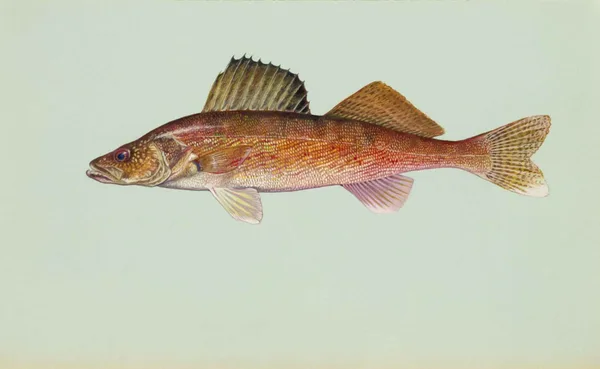
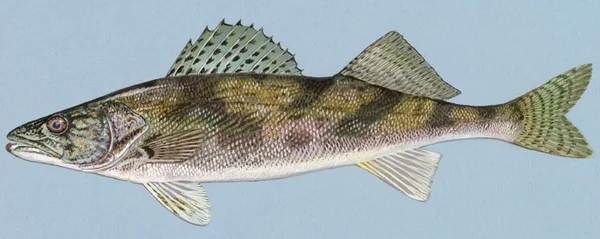
Sauger closely resemble walleye but are typically smaller, rarely exceeding 3 pounds in Michigan waters. The most reliable identification feature is the spiny dorsal fin — sauger have distinct dark spots or blotches scattered across it, while walleye have a single dark blotch at the base. Sauger have darker, more pronounced saddle markings across the back compared to walleye. They lack the white tip on the lower tail lobe that walleye display. The body shape is slightly more cylindrical and slender than a walleye of comparable length.
Where to Find Sauger
The Detroit River is Michigan’s premier sauger fishery. The rocky substrate, consistent current, and deep pools concentrate sauger during fall and winter. Jigging blade baits and hair jigs in 15 to 30 feet of water near Fighting Island and Grosse Ile produces consistent catches.
The Muskegon River holds sauger populations along its lower and middle reaches. Areas below dams and where tributaries enter the main channel are particularly productive. The river’s turbid stretches suit sauger well — their eyes are adapted for low-visibility conditions even better than walleye.
Saginaw Bay and Lake Erie (Michigan’s Monroe County shoreline) support sauger mixed in with walleye populations. Sauger are caught incidentally by walleye anglers jigging and trolling, particularly in spring and fall.
Seasonal Patterns
Fall and Winter (October-March): This is the primary sauger season. As water temperatures drop below 55 degrees, sauger become increasingly active and begin staging below dams for their late-winter spawning migration. Vertical jigging with blade baits, hair jigs, or jigging spoons in the slack water behind wing dams and along channel edges is the standard approach. Sauger spawn when water temperatures reach 40 to 50 degrees, typically in February and March in southern Michigan.
Spring (April-May): Post-spawn sauger feed aggressively before dispersing downstream. Jigs tipped with minnows, drifted along current seams and gravel bars, are effective during this transition period.
Summer (June-September): Sauger scatter into deeper river pools and become less predictable. They hold in current breaks, behind bridge pilings, and along deep ledges. While catchable year-round, summer sauger require more effort to locate.
Tactics and Rigging
Vertical jigging is the bread-and-butter sauger technique. Position your boat upstream of structure — wing dams, rock piles, or dam tailwaters — and vertically work a 1/4 to 3/8-ounce jig or blade bait along the bottom. Sauger feed tight to the substrate and rarely chase baits more than a foot or two off bottom. Use a sensitive medium-light spinning rod with 6 to 8-pound fluorocarbon to detect subtle strikes.
Hair jigs and marabou jigs in white, chartreuse, or pink are traditional sauger baits that have produced for decades in Detroit River tailwaters. Tip them with a minnow head for added scent.
Drifting jig-and-minnow rigs along gravel flats and current edges is effective when sauger are spread out rather than stacked below dams. Use enough weight to maintain bottom contact in current while allowing the jig to bounce and tumble naturally.