Pink Salmon Fishing in Michigan
Pink salmon — also known as humpback salmon — are the smallest of the Pacific salmon species in the Great Lakes, but they make up for their modest size with aggressive strikes and determined fights. While Chinook and Coho dominate Michigan’s Lake Michigan salmon fishery, Pink salmon have carved out their own niche in the Upper Peninsula, where the St. Marys River rapids offer what many anglers consider the finest Pink salmon fishery outside of Alaska.
Pink salmon were accidentally introduced to the Great Lakes in 1956 when fish escaped from a hatchery near Thunder Bay, Ontario. By the late 1970s, they had colonized all five Great Lakes. Today, Lake Huron and its tributaries hold the strongest populations in Michigan, with the St. Marys River and Carp River serving as the primary fishing destinations.
Identification
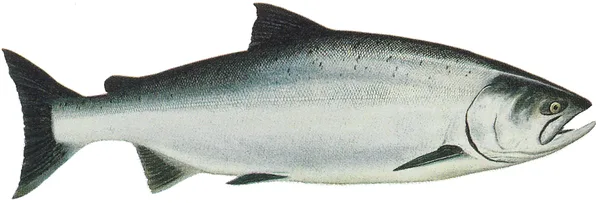
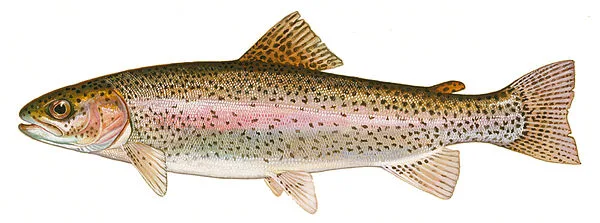
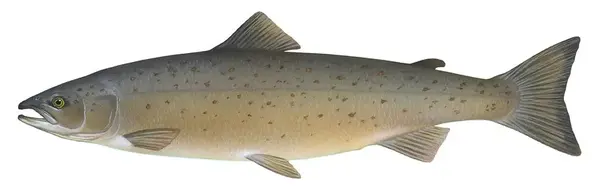
Pink salmon are the smallest Pacific salmon, with most Michigan fish running 2 to 5 pounds and 17 to 19 inches. They have large oval black spots on the back and both lobes of the tail fin, a feature that distinguishes them from Coho salmon (which have spots only on the upper tail lobe). The body is silvery in the lake, turning olive-green to dark on top with pinkish sides as spawning approaches.
Males develop the distinctive pronounced hump on their back during spawning — the source of the “humpback” name — along with a hooked jaw (kype) and darkened coloration. Females show less dramatic physical changes. Pink salmon have smaller scales than other Pacific salmon relative to body size, giving them a smoother appearance.
Where to Find Pink Salmon
St. Marys River in Sault Ste. Marie is Michigan’s premier Pink salmon destination. The fast-flowing rapids below the Soo Locks are wadeable and accessible from the U.S. side, creating a unique urban fishery. Fish stage in the deeper pools and channels of the river before pushing into the rapids to spawn. The combination of strong current, clear water, and concentrated fish makes this an exceptional fishery for both fly and spinning anglers.
Carp River in Mackinac County produced the current state record (8 lbs 8.96 oz in 1987) and remains a productive tributary fishery. The river receives consistent runs as fish move in from Lake Huron.
Other Lake Huron tributaries in the southeastern Upper Peninsula see Pink salmon runs of varying size. Smaller streams can produce fast action when fish are running, though access and timing are more variable than the St. Marys.
Lake Superior tributaries along the eastern UP hold some Pinks, though in lower numbers than the Lake Huron side. Tributaries near Munising and Marquette occasionally produce fish.
Pink salmon are rarely caught by boat anglers in the open Great Lakes. The vast majority are taken as they ascend tributaries or hold in river systems.
Seasonal Patterns
Late Summer (August): Pink salmon begin staging near the mouths of tributaries as water temperatures and day length trigger their spawning migration. In the St. Marys River, fish concentrate in the deeper channels and pools below the rapids. Anglers trolling with downriggers or jigging with spoons in these deeper stretches can intercept staging fish before they enter the fast water.
Early Fall (September): The peak of the run. Fish push into the rapids and tributaries in earnest. The St. Marys rapids see the heaviest concentrations, with fish holding in current seams, behind boulders, and in pocket water throughout the rapids. Tributary streams like the Carp River see their best fishing during this window. Action can be fast when timing coincides with a strong push of fish.
Odd-Year vs. Even-Year Runs: Pink salmon ordinarily spawn on a two-year cycle, and the largest runs historically occur during odd-numbered years. However, enough fish mature on one- and three-year cycles that runs occur annually. Odd years are worth prioritizing if you’re planning a dedicated Pink salmon trip.
Tackle and Techniques
Fly Fishing
Fly fishing is the dominant technique in the St. Marys rapids and the most effective way to target Pinks in fast water. Streamers and nymphs account for the bulk of the catch.
- Streamers: Woolly Buggers, Egg-Sucking Leeches, and simple marabou patterns in pink, chartreuse, white, and black. Swing them through current seams on a sink-tip or intermediate line.
- Nymphs: Stonefly and caddis nymph patterns drifted through holding water. Pink and egg-pattern flies also produce.
- Gear: A 7- to 8-weight fly rod handles the current and the fish. Floating line with a sink-tip leader or a full sink-tip line for deeper runs.
Spinning Gear
Spinning tackle is effective both in the rapids and in smaller tributaries.
- Inline spinners: Mepps Aglia in sizes 2 and 3 are a proven producer — the state record was caught on a Mepps #2. Silver, gold, and pink blade finishes work well.
- Small spoons: Kastmaster, Little Cleo, and Crocodile-style spoons in 1/4 to 3/8 ounce are effective when cast upstream and retrieved through holding water.
- Jigs: Small marabou and soft-plastic jigs drifted through deeper pools can pick off staging fish.
- Gear: A 7-foot medium-light spinning rod with a 2500-size reel and 6- to 8-pound monofilament handles Pink salmon well.
Trolling and Jigging (Pre-Run Staging Fish)
In the deeper water of the St. Marys River before fish enter the rapids, trolling with downriggers or jigging with spoons catches appreciable numbers. Small to mid-sized spoons in silver and pink finishes, fished at moderate depths, intercept staging fish moving through the river system.
Table Quality
Pink salmon are edible but generally considered the least desirable table fare among the Great Lakes salmon species. The flesh is lighter in color and softer in texture than Chinook or Coho. Fish caught fresh from cold water before spawning condition are the best eating. Smoking is a popular preparation that makes the most of the flavor. Always consult the Michigan Eat Safe Fish Guide for consumption advisories, as some Michigan waters carry PCB, mercury, and PFOS advisories that affect recommended serving frequency.