Overview
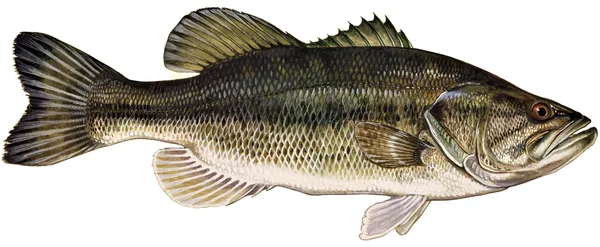
Largemouth bass are the most popular game fish in Michigan. They live in virtually every warm-water body across the state — from farm ponds and urban park lakes to major inland lakes and slow-moving rivers. Their willingness to strike a wide range of baits and lures, combined with explosive surface strikes and hard fights, make them the species most Michigan anglers target first.
Michigan’s largemouth fishery benefits from the state’s extraordinary water resources: more than 11,000 inland lakes, 36,000 miles of rivers, and countless farm ponds. The state record of 11 pounds 15 ounces was caught by William Maloney from Big Pine Island Lake in Kent County back in 1934. That record was tied 25 years later when Jack Rorex landed an identical 11-pound, 15-ounce largemouth at Alcona Dam Pond (Bamfield Dam) in Oscoda County in 1959. Fish over 6 pounds are caught with reasonable frequency from the best waters, though true double-digit bass remain rare in Michigan.
Where to Find Them in Michigan
Houghton Lake is one of Michigan’s premier largemouth destinations. At 22,000 acres it is the state’s largest inland lake, and its shallow average depth means extensive weed growth, lily pads, and warm water throughout the growing season — ideal largemouth habitat. Fish shallow crankbaits around riprap and work worms, jigs, and topwater lures through the abundant vegetation.
Lake St. Clair is best known for its trophy smallmouth fishing, but the marshy bays, canal systems, and shallow flats along its western and northern shores hold strong populations of largemouth bass. The Metro Park canals and Anchor Bay area are particularly productive in spring and early summer.
In the northern Lower Peninsula, Fletcher Pond in Alpena and Montmorency counties is a consistent largemouth producer with flooded timber and aquatic vegetation. Burt Lake and Mullet Lake — connected as part of the Inland Waterway — combine for over 33,000 acres of water with sandy weed beds and protected bays that hold largemouth throughout the season. Hubbard Lake in Alcona County covers nearly 9,000 acres and supports both largemouth and smallmouth populations.
In the southern half of the state, Gun Lake in Allegan County, Kent Lake in Oakland County, Wixom Lake in Gladwin and Midland counties, and Indian Lake in Cass County all hold quality largemouth. Muskegon Lake on the west side is an underrated option, with docks, lily pads, and submerged grass beds creating textbook largemouth cover.
Do not overlook small waters. Michigan has tens of thousands of farm ponds and community lakes, many of which receive little fishing pressure. A 2-acre pond managed for bass and bluegill can produce surprisingly large fish, and nearly every county in the state has these hidden opportunities.
Seasonal Patterns
Spring (March - May): As water temperatures climb past 50 degrees in late March and April, largemouth move from deep winter holding areas toward shallow flats, creek arms, and protected coves. The pre-spawn period — roughly 55 to 65 degree water — is the most productive fishing of the year. Bass feed aggressively on crawfish and baitfish before committing to beds. Focus on secondary points, channel swings near flats, and the first hard cover adjacent to spawning areas. In southern Michigan this happens by mid-April; in the northern Lower Peninsula and Upper Peninsula, expect it closer to mid-May.
Summer (June - August): Post-spawn bass scatter. Some hold on offshore structure — humps, weed edges, and brush piles — while others relate to shallow cover like docks, laydowns, and vegetation. Early morning topwater fishing is excellent through June and July. During the heat of the day, deeper presentations around 10 to 20 feet are more productive on larger lakes.
Fall (September - October): Bass follow baitfish into the backs of bays and along wind-blown banks. Perch, shiners, and shad are schooling, and bass herd them against banks and points. This is spinnerbait and crankbait season. Fish aggressively and cover water.
Winter (November - February): Largemouth slow down significantly but do not stop feeding. Ice anglers can target largemouth with tip-ups and small jigs around deep weed edges. Open-water anglers on the rare warm day can work blade baits, hair jigs, and suspending jerkbaits slowly around deep structure for quality fish.
Techniques and Tackle
A medium-heavy baitcasting rod in the 7-foot range paired with 12 to 17 pound fluorocarbon covers most largemouth situations in Michigan. For finesse work and lighter lures, a medium spinning rod with 8 to 10 pound braid and a fluorocarbon leader is the standard.
Proven lure choices for Michigan largemouth include Texas-rigged plastic worms and creature baits (green pumpkin and black/blue are staple colors), shallow and medium-diving crankbaits in shad and crawfish patterns, 3/8 to 1/2 ounce spinnerbaits with willow-leaf blades, and football jigs dragged along rocky or stumpy bottoms. Topwater frogs and buzzbaits are deadly over vegetation and around wood cover in low-light conditions. In the weedy inland lakes that define much of Michigan’s bass habitat, weedless presentations like Texas rigs and frogs are especially important.
Tips for Beginners
Start with a Texas-rigged 7-inch ribbon-tail worm in green pumpkin. Cast it near visible cover — docks, fallen trees, weed edges, rock walls — let it sink to the bottom, and drag it slowly. This simple approach catches largemouth year-round across Michigan. Pay attention to water temperature: a cheap clip-on thermometer tells you more about where the bass are than any electronics. Fish shallow when the water is between 55 and 75 degrees, and go deeper when it climbs above 80 or drops below 50.
Michigan’s public access is excellent. Most inland lakes have at least one DNR boat launch, and many have shore fishing opportunities at state parks and county parks. The Michigan DNR website lists access sites for every major lake in the state, making it easy to find a new spot to fish without a guide or a boat.