Lake Trout Fishing in Michigan
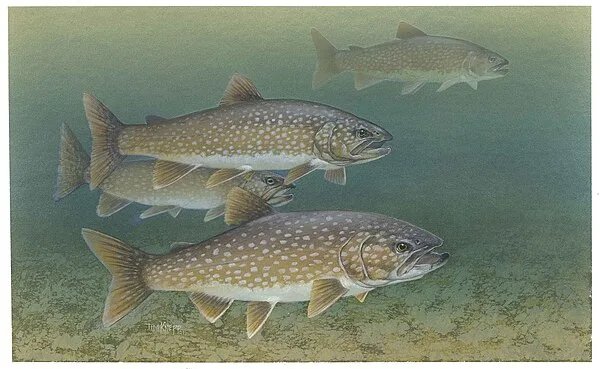
Michigan offers one of the finest lake trout fisheries in the world. With shoreline on three of the five Great Lakes — Superior, Michigan, and Huron — the state provides more lake trout water than any other in the Lower 48. Unlike chinook and coho salmon that roam the open water column or steelhead that run tributaries, lake trout are bottom-oriented fish that spend most of their lives in the cold, dark depths. They are the oldest native salmonid in the Great Lakes, and while their populations were nearly eliminated by the sea lamprey in the mid-20th century, sustained stocking and lamprey control efforts have rebuilt the fishery to the point where lake trout are now a consistent and rewarding target for Michigan’s trolling fleet.
The state record of 61 pounds 8 ounces was caught on Lake Superior in 1997, rumored to have come from the legendary Stannard Rock reef. Fish in the 5- to 15-pound range are common catches, and fish over 20 pounds are landed each season from all three lakes.
Where to Fish
Michigan’s lake trout fishing spans three Great Lakes, each offering distinct character.
Lake Michigan provides the most accessible lake trout fishing in the state. Ludington — widely regarded as the top salmon and trout port on the lake — offers excellent offshore structure between Big Sable Point and Little Sable Point. Manistee and Frankfort, both world-class charter ports, produce consistent lake trout action over deep reefs. Charlevoix provides access to both Lake Michigan and Lake Charlevoix, which holds its own lake trout population across 17,200 acres of deep, cold water. Leland, Traverse City (Grand Traverse Bay), and Grand Haven round out the Lake Michigan options.
Lake Superior is where the true giants live. Marquette is the primary launch point for anglers targeting Stannard Rock, a remote reef roughly 50 miles offshore that produces some of the largest lake trout in the Great Lakes. Munising, Grand Marais, and Lac La Belle on the Keweenaw Peninsula offer access to Lake Superior’s vast, cold-water lake trout habitat. Fish here tend to run larger on average than those in the lower lakes.
Lake Huron provides excellent lake trout fishing from ports including Alpena, Rogers City, and Presque Isle. The northern reaches of Lake Huron, with their rocky reefs and cold, deep water, support strong lake trout populations.
Lake trout are structure-oriented across all three lakes. They relate to rocky reefs, clay humps, drop-offs, and any bottom irregularities that concentrate forage. Quality electronics are essential for locating these features and marking fish. Unlike salmon trolling, where covering distance at speed is the strategy, lake trout fishing often involves slower, more precise passes over known structure.
Seasonal Patterns
Spring (May-June) is one of the best windows for lake trout. As the lakes stratify and a thermocline begins to develop, lake trout push into the 40- to 80-foot zone to feed on alewife and smelt. This is the most accessible period for smaller boats, as fish can be found relatively close to shore over moderate depths. Spring lake trout are aggressive feeders coming off winter, and action can be fast when you locate a concentration of fish on structure.
Summer (July-August) pushes lake trout deeper as surface temperatures climb. Fish retreat below the thermocline into 80 to 150 feet of water or deeper. Downriggers set near the bottom are essential. Trolling speeds slow to 1.5 to 2.0 mph. Many charter captains target lake trout during this period as a reliable alternative when chinook and coho action slows between spring and fall peaks.
Fall (September-October) brings lake trout back into reach as the thermocline breaks down and water temperatures cool. Fish become increasingly active as they prepare for their late-fall spawning period on rocky reefs. This is the second-best window of the year, with fish aggressive and willing to strike.
Winter (November-March) largely shuts down the open-water boat fishery due to weather, though lake trout remain active in the lakes year-round. In some areas, ice fishing for lake trout is possible when safe ice forms on protected bays.
Techniques
Trolling Spoons
The most common approach for Great Lakes lake trout. Run medium to large spoons on downriggers set within 5 to 15 feet of the bottom. Flutter spoons and dodger-spoon combinations that produce an erratic, wounded-baitfish action are particularly effective. Silver, green, and glow finishes are staples. Trolling speeds of 1.5 to 2.5 mph are typical, though experimenting with speed changes often triggers strikes.
Dodger-Fly Combos
An 8- to 11-inch dodger paired with a trailing fly or squid is a proven lake trout presentation, especially in deeper water. The dodger provides flash and vibration that draws fish from a distance, while the trailing fly seals the deal. Set these rigs on downriggers tight to the bottom.
Jigging
Vertical jigging over structure is an underutilized technique that can be highly effective when fish are concentrated on reefs or humps. Heavy jigs (1 to 3 ounces) or flutter spoons dropped to the bottom and worked with sharp lifts and controlled falls trigger reaction strikes from lake trout holding on structure. This approach requires precise boat control and good electronics but can outproduce trolling when conditions are right. Jigging is especially popular on Lake Charlevoix and in Grand Traverse Bay.
Conservation Context
Lake trout are the only salmonid native to the Great Lakes. Their populations collapsed in the 1940s and 1950s due to sea lamprey predation and overfishing. Decades of stocking by federal and state agencies, combined with ongoing sea lamprey control, have restored lake trout to fishable numbers across all three of Michigan’s Great Lakes. Natural reproduction has been documented in parts of Lake Michigan, Lake Superior, and Lake Huron — a promising sign for the long-term future of this species. Michigan’s bag limits and size restrictions reflect the ongoing management priority of rebuilding self-sustaining lake trout populations while still providing a world-class recreational fishery.