Common Carp Fishing in Michigan
The common carp is one of the most abundant and widely distributed fish in Michigan, inhabiting everything from urban ponds and farm ditches to major river systems and the Great Lakes. Originally introduced from Europe in the 1800s, carp have established themselves across the state. The state record stands at 61 pounds 8 ounces, caught from Wolf Lake by Dale E. France in 1974, though fish exceeding 30 pounds are taken from Michigan waters each year.
Identification
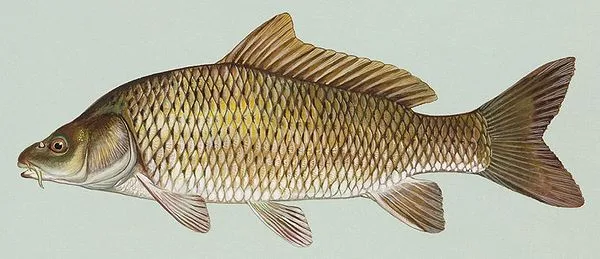
Common carp have large, thick bodies covered in prominent scales, with coloration ranging from golden-bronze to olive-brown. They have a single long dorsal fin, a downturned mouth with two pairs of barbels, and a broad forked tail. Mirror carp (a variant with irregular, oversized scales) and leather carp (nearly scaleless) also appear in Michigan waters, though they are less common.
Where to Find Carp
Carp thrive in warm, shallow water with soft bottoms. In rivers, focus on slow-moving pools, backwater areas, and stretches below low-head dams.
Lake St. Clair is a world-class carp fishery and a top destination for both rod-and-reel anglers and bowfishers. The lake’s vast shallow flats, warm summer temperatures, and abundant food supply produce large, well-conditioned carp. The south shore of Lake Michigan also offers excellent carp fishing, with common carp lurking in abundance along harbors and river mouths.
The Grand River — Michigan’s longest river — holds substantial carp populations from Lansing through Grand Rapids and downstream. The Muskegon River, Saginaw River system, and Detroit River are also highly productive. In the southeast, the Clinton River and its North Branch support carp along with other warm-water species.
Inland lakes across southern and central Michigan are loaded with carp. Mona Lake in Muskegon County, Lake Fenton in Genesee County, Hardy Pond in Newaygo County, and Allegan Marsh in Allegan County are all known producers. Many smaller lakes and farm ponds across the southern Lower Peninsula hold excellent populations as well.
Rod-and-Reel Tactics
European-style carp fishing has grown steadily in Michigan over the past decade. The hair rig — where the bait hangs from a short piece of line behind the hook rather than being threaded onto the hook itself — is the foundation of modern carp angling. Paired with a bolt rig or running lead setup, this presentation allows the carp to mouth the bait confidently before the hook finds purchase.
Pack bait fishing is another highly productive method. Mix rolled oats, canned corn, breadcrumbs, and a binding agent into a dense ball that you press around an inline flat-method feeder or a large sinker. The pack bait breaks down on the bottom, creating a concentrated feeding zone that draws carp in and keeps them rooting.
For budget-friendly carp fishing, a can of sweet corn and a size 4 to 6 hook fished on a simple slip sinker rig will catch carp from any Michigan waterway. Cast to visible feeding activity — look for mud clouds, rolling fish, and tailing carp in shallow water.
Medium-heavy spinning or baitcasting rods in the 7 to 8-foot range paired with 12 to 15-pound monofilament or 20-pound braid handle most Michigan carp. A quality reel with a smooth drag is essential — carp make powerful, sustained runs that will expose any weakness in your tackle.
Bowfishing for Carp
Carp are the number-one bowfishing target in Michigan. Both common carp and suckers can be taken by spear or bow and arrow from the Great Lakes and non-trout inland waters year-round. The best action occurs from May through August when carp move into shallow spawning flats. Look for fish cruising in water less than three feet deep along lake margins, in flooded fields adjacent to rivers, and in backwater sloughs.
Lake St. Clair is the premier bowfishing destination in the state, with its expansive shallow flats holding large numbers of carp, gar, and other species visible in clear water. Mona Lake, Lake Fenton, Allegan Marsh, and backwater areas along the Grand River and Muskegon River are also productive. Boat-mounted bowfishing with lights after dark (where permitted) can produce heavy action during summer months.
Seasonal Patterns
Spring (April-May): Carp move shallow to spawn as water temperatures hit 60 to 68 degrees. Spawning fish are visible thrashing in shallows and are prime bowfishing targets. Rod-and-reel anglers should target pre-spawn staging areas — slightly deeper flats adjacent to spawning bays.
Summer (June-September): Post-spawn carp feed heavily to recover condition. Early mornings and evenings produce the best rod-and-reel action. Bowfishing remains productive through summer in shallow bays and river backwaters.
Fall (October-November): Carp feed aggressively before winter, often congregating in large schools near deeper structure. Pack bait and boilie fishing can produce multiple quality fish in a session.
Winter (December-March): Carp become sluggish and are difficult to catch, though they can occasionally be taken on bait fished slowly on the bottom in deeper holes during mild spells.