Brook Trout Fishing in Michigan
The brook trout holds a special place in Michigan fishing — it’s the official state fish and a symbol of the clean, cold streams that define Michigan’s northern landscape. Michigan has more miles of coldwater trout streams than any other state east of the Mississippi, and native brook trout populations thrive in hundreds of them, particularly in the Upper Peninsula.
Identification
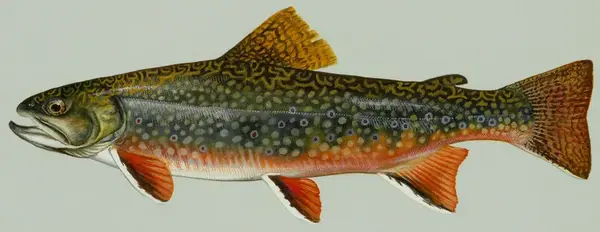
Brook trout are one of the most strikingly beautiful freshwater fish. They have a dark green to brown back with distinctive worm-like markings (vermiculations), red spots with blue halos along their sides, and vivid orange-red fins edged in white and black. During fall spawning, males develop intensely bright orange and red coloring on their bellies. Brook trout are actually a char (genus Salvelinus), not a true trout. They rarely exceed 12 inches in streams, though lake-dwelling fish can grow considerably larger.
Where to Find Brook Trout
Upper Peninsula streams hold Michigan’s best brook trout fishing. The Porcupine Mountains, Huron Mountains, and eastern UP contain hundreds of small, cold streams with native populations. Many of these are remote and require hiking to access.
Au Sable River system in the northern Lower Peninsula is legendary trout water. Its spring-fed tributaries support healthy brook trout populations alongside brown and rainbow trout.
Jordan River (Antrim County) is one of Michigan’s designated Natural Rivers and supports a strong native brook trout fishery in its upper reaches.
Pigeon River Country in Otsego and Cheboygan counties offers remote stream fishing for brook trout in a wilderness setting — the same area that holds Michigan’s elk herd.
Techniques
Brook trout are opportunistic feeders and less wary than brown trout, making them accessible to anglers of all skill levels. Light spinning gear with small inline spinners (size 0-1 Mepps or Panther Martin) is highly effective. Fly fishing with small dry flies (Adams, Elk Hair Caddis, Royal Wulff) and nymphs (Pheasant Tail, Hare’s Ear) is the classic approach. In streams, work upstream and present baits or lures into pools, undercut banks, and behind rocks. Keep a low profile — brook trout in small streams spook easily.