Overview
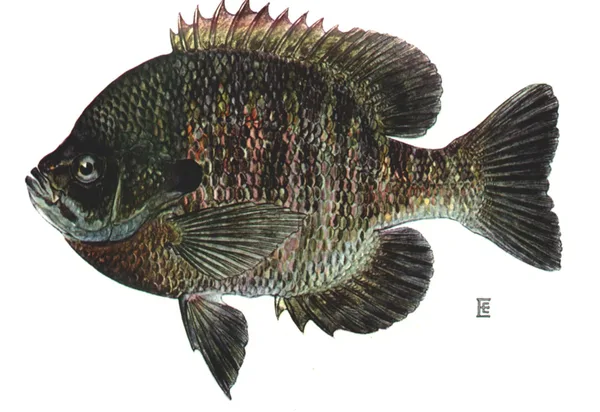
Bluegill are the most widely caught fish in Michigan. They live in every county, inhabit every type of water from 1-acre farm ponds to the state’s largest inland lakes, and they bite willingly for anglers of all skill levels. More Michigan kids catch their first fish — a bluegill on a worm under a bobber — than any other species, and experienced anglers who target trophy bluegill consider a 10-inch specimen one of the most challenging freshwater trophies to consistently catch.
The state record of 2 pounds 12 ounces from Vaughn Lake in Alcona County has stood since 1983, but fish over a pound are available in well-managed waters across the state. Bluegill grow slowly — a 9-inch fish may be 7 to 10 years old — which makes selective harvest important for maintaining quality populations.
Where to Find Them in Michigan
Bluegill are truly everywhere, but some waters consistently produce bigger fish. Houghton Lake, Michigan’s largest inland lake at over 20,000 acres, is widely regarded as the state’s premier bluegill fishery. Its shallow, weedy basin grows master angler-class bluegill with regularity. The Middle Grounds, a large flat area on the northeast shore, and the north shoreline east of Houghton Point are especially productive when water temperatures approach 65 degrees.
Long Lake in Grand Traverse County covers nearly 2,900 acres and offers excellent structure — bays, points, islands, weedlines, and steep drop-offs — that holds big bluegill throughout the summer. Wakely Lake near Grayling is a special-regulations lake (artificial lures only, catch-and-release, open June 15 through August 31) that consistently produces master angler-quality fish up to 14 inches. Gull Lake in Kalamazoo County and Lake Cadillac in Wexford County are also reliable producers.
In the Upper Peninsula, many remote inland lakes hold excellent bluegill populations with low fishing pressure. Indian Lake in Schoolcraft County and numerous smaller lakes accessible from forest roads provide outstanding panfish action for anglers willing to explore.
Private farm ponds are Michigan’s secret bluegill fishery. A well-managed pond with a proper bass-to-bluegill ratio and limited harvest can grow bluegill to 10 inches and beyond. If you have access to private water, do not overlook it.
Seasonal Patterns
Spring (April - May): As water temperatures climb into the 60s, bluegill move from deeper winter haunts toward shoreline areas. They begin feeding actively on insects, larvae, and small invertebrates in shallow water. Pre-spawn bluegill can be found around emerging weed growth, submerged brush, and along gradually tapering banks. This is an excellent time to catch good numbers on small jigs and live bait.
Bedding Season (Late May - July): The spawn is the main event for bluegill fishing in Michigan. When water temperatures hit 68 to 75 degrees, males fan out circular nests on firm sand, gravel, or clay bottoms in 1 to 4 feet of water. These beds are often visible as light-colored circles clustered together, sometimes with dozens of nests in a colony. Bedding bluegill are aggressive and territorial. A wax worm, cricket, or small jig dropped onto a bed will usually draw an immediate strike. The largest males (bulls) guard the beds and are the first to bite. Spawning occurs in waves, so productive bed fishing can extend from late May well into July.
Summer (July - August): Post-spawn bluegill hold in and around aquatic vegetation — lily pads, coontail, milfoil, and pondweed. They feed throughout the day on insects that fall on the surface and invertebrates in the weed cover. Fly fishing with small poppers and foam spiders is outstanding during summer evenings. Conventional anglers do well with 1/64 ounce jigs tipped with wax worms fished along weed edges and in pockets within vegetation.
Fall (September - October): Bluegill gradually pull off the banks and begin relating to deeper weed edges and drop-offs. They still feed actively, and good catches are possible for anglers who follow them to 6 to 12 feet of water. Small jigs and live bait fished under a slip bobber are the standard approach.
Winter (November - March): Bluegill are one of the most popular ice fishing targets in Michigan. They school up in basin areas of lakes and around remaining green vegetation in 15 to 25 feet of water. Tiny jigs tipped with wax worms or spikes fished on ultralight rods through the ice produce steady action. Houghton Lake, Higgins Lake, and countless smaller inland lakes draw ice anglers targeting bluegill all winter long.
Techniques and Tackle
Ultralight spinning gear is ideal for bluegill. A 5 to 6 foot ultralight rod with 4 pound monofilament or 2 to 4 pound fluorocarbon handles everything from bobber fishing to casting small jigs. For fly anglers, a 3 or 4 weight rod with a floating line and small poppers, foam spiders, or nymphs provides exceptional sport.
The simplest and most effective rig is a size 8 hook with a small piece of nightcrawler or a single wax worm, suspended 18 to 24 inches below a small fixed bobber. Add one small split shot 6 inches above the hook. Cast near visible cover — docks, weed edges, fallen trees, bed colonies — and let it sit. When the bobber dips or moves sideways, set the hook with a gentle lift.
For artificial presentations, 1/64 to 1/32 ounce jigs with small curly-tail grubs, tubes, or soft plastic nymphs in white, chartreuse, or black are versatile and effective year-round. Tipping the jig with a wax worm or spike adds scent and improves catch rates, especially in tougher conditions.
Tips for Beginners
Bluegill fishing is the best entry point for anyone new to fishing in Michigan. The equipment is inexpensive, the techniques are simple, and the fish cooperate. Start with a basic ultralight rod and a pack of size 8 hooks, a bag of split shot, a few small bobbers, and a container of wax worms or nightcrawlers from any bait shop. Find a public lake or pond with shoreline access, look for shallow areas with some kind of cover, set your bobber so the bait hangs about 2 feet deep, and cast out. If bluegill are present, you will know within minutes.
One important note on harvest: keeping bluegill to eat is part of the tradition, and panfish fillets are excellent table fare. However, selectively harvesting medium-sized fish (7 to 8 inches) and releasing the largest bulls helps maintain the quality of the fishery. The big ones are the best spawners and take years to replace.