Black Crappie Fishing in Michigan
Black crappie are among the most popular panfish in Michigan, prized for their willingness to bite, their schooling behavior, and their excellent table quality. Found in lakes, reservoirs, farm ponds, and some larger river backwaters across the state, black crappie offer consistent action for anglers of all skill levels. The state record of 4 pounds 2 ounces from Lincoln Lake in Kent County has stood since 1947, a testament to how difficult it is to grow a truly giant crappie.
Identification
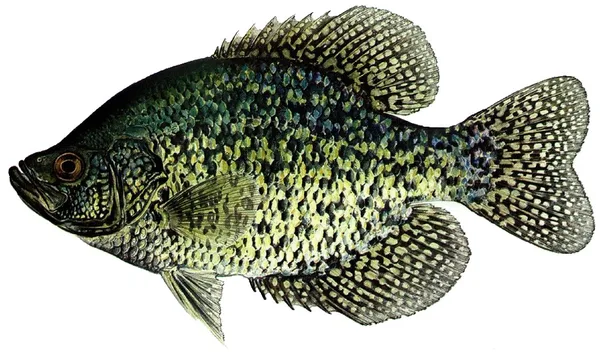
Black crappie are distinguished from their close relative, the white crappie, by their irregular dark speckled pattern across silvery-green sides. They have seven or eight dorsal spines compared to the white crappie’s five or six. Their body shape is slightly more compact and rounded. In clear-water lakes, black crappie tend to outnumber white crappie, while the reverse is often true in stained or turbid water.
Seasonal Patterns in Michigan
Spring (March through May): This is prime time. As water temperatures climb past 50 degrees, black crappie begin staging on deeper structure near spawning flats. Once temps reach 58 to 65 degrees, males fan out nests in shallow water, often around submerged brush, fallen timber, and dock pilings. This shallow push makes spring the most accessible season for bank anglers. Target depths of 2 to 8 feet near cover.
Summer (June through August): After the spawn, crappie pull back to deeper structure. Look for them suspended over creek channels, along deep weed edges, and around submerged brush piles in 12 to 20 feet of water. Electronics are valuable for locating suspended schools. Vertical jigging and slow trolling with small crankbaits are the go-to approaches.
Fall (September through November): Crappie feed aggressively as water temperatures drop and baitfish push into coves and creek arms. Fish transition from deep summer haunts back toward shallower structure. Early fall can produce outstanding catches around standing timber and submerged brush.
Winter (December through February): Black crappie remain active under the ice and are one of the most popular ice fishing targets on Michigan’s inland lakes. Small jigs tipped with waxworms or spikes fished in 15 to 25 feet of water near remaining green vegetation produce consistent catches. Houghton Lake, Belleville Lake, and many northern Michigan lakes draw ice anglers targeting crappie all winter.
Top Tactics
The most productive technique across seasons is a small jig — typically a 1/32-oz to 1/16-oz tube jig or marabou jig — fished vertically or cast to visible cover. Tip the jig with a live minnow for added attraction, especially in cold water. In spring, a slip bobber rig with a jig or plain hook and minnow set at 3 to 6 feet is deadly around spawning cover.
For boat anglers, spider rigging (multiple rod holders fanning long poles over the bow) allows precise presentation over brush piles and standing timber. This method is particularly effective on larger lakes where crappie relate to submerged structure in deeper water. Many successful crappie anglers use long crappie poles in the 10- to 14-foot range for this purpose.
Top Michigan Waters
Belleville Lake in Wayne County is regarded by many panfish anglers as the best crappie lake in Michigan. Its 1,250 acres of water feature excellent bottom structure with submerged trees, brush, and weed beds that hold crappie year-round. Both black and white crappie thrive here.
Houghton Lake, at over 20,000 acres, offers vast shallow habitat with stained water and heavy weed growth that grows plentiful black crappie. Spring fishing in the canals and boat harbors produces fish in the 10- to 14-inch class, with slabs up to 17 inches caught each year.
Union Lake in Oakland County consistently produces crappie over 14 inches. The south and east sides of the lake are particularly productive during the spring spawn in water around 10 feet deep.
Hamlin Lake in Mason County stretches over 12 miles and covers 5,000 acres. The northern portion, with its shallower, flatter basin, produces the most crappie.
Lac Vieux Desert on the Michigan-Wisconsin border in the Upper Peninsula is a 4,300-acre lake with abundant crappie populations supported by its extensive weed beds.
The Groveland Mine Ponds in Dickinson County in the Upper Peninsula — including West Lake, South Lake, Island Lake, and East Lake — also hold solid black crappie populations. The Michigan DNR regularly stocks brush piles and fish attractors in state-managed waters to enhance crappie habitat across the state.
Regulations and Limits
There is no minimum size limit for black crappie in Michigan. Black and white crappie are included in the combined panfish daily bag limit along with bluegill, sunfish, rock bass, and warmouth. Michigan reduced this combined limit to 10 fish starting in 2026. Always check the current Michigan Fishing Regulations Guide for any lake-specific exceptions before your trip. A valid Michigan fishing license is required for all anglers age 17 and older.